What Is an AI Agent? Marketing Use Cases
What is an AI agent, how does it work, and which tasks can marketing teams use this technology for? Here's a practical guide.

Contents
- What Is an AI Agent and How Does It Differ From a Chatbot?
- How Do AI Agents Work?
- AI Agent Use Cases in Marketing
- AI Agent Applications in Customer Service
- Which Platforms Can Be Used to Build AI Agents?
- What Should You Consider When Choosing an AI Agent?
- Key Takeaways
- Conclusion
- Frequently asked questions
- Sources
An AI agent is an autonomous software system that perceives data from its environment, makes decisions based on that data, and can independently take action to achieve a specific goal (Turkcell). Unlike traditional automation tools, it isn't limited to predefined rules; it can assess situations and create its own plans. For marketing teams, this means the ability to delegate most repetitive research, content, and customer communication tasks.
What Is an AI Agent and How Does It Differ From a Chatbot?
The concept of an AI agent is often confused with chatbots lately, but they aren't the same thing. A chatbot typically responds within predefined scenarios and rules, while an AI agent can understand customer requests, gather necessary data, create a solution plan, and interact with different systems to complete a task end-to-end (Turkcell).
For example, on an e-commerce site, a traditional chatbot might respond to "Where is my order?" with a standard template, while an AI agent queries the order number, communicates with the shipping company's API, suggests alternative solutions if there's a delay, and escalates to customer service if needed. This difference stems from agents combining "thinking" and "action" steps.
Practical tip: When evaluating an AI agent for your brand, don't just ask "does it answer questions?" but rather "which systems can it connect to and which tasks can it complete independently?" If you're managing customer communications via WhatsApp, you can check out our WhatsApp business account setup guide.
How Do AI Agents Work?
AI agents generally operate in four fundamental stages: sensing (data collection), decision-making (setting goals and breaking tasks into subtasks), action (making API calls), and learning (adapting based on results) (Turkcell). This cycle enables the agent to manage a process rather than simply provide a one-time response.
Several core components underlie this structure: Large Language Models (LLM), short-term, long-term, and episodic memory, instructions that give the agent personality, tools for interacting with external systems, and an architecture that coordinates all of these (Salesforce). Many modern agents use the ReAct (Reasoning and Action) paradigm, which interleaves reasoning with actions; this allows the agent to take a step, evaluate the result, and plan the next step accordingly (Salesforce).
| Stage | What It Does | Marketing Example |
|---|---|---|
| Sensing | Collects data | Tracking competitor pricing and campaigns |
| Decision-making | Breaks goal into tasks | Creating a content calendar |
| Action | Makes API calls | Publishing content on social media |
| Learning | Adapts based on results | Noting which headline formats get better engagement |
AI Agent Use Cases in Marketing
AI agents can support marketing teams in many daily tasks to reduce workload. One of the most common applications is generating content ideas, drafting posts, and managing publishing schedules for social media; you can find more detailed information on this in our AI content creation for social media guide.
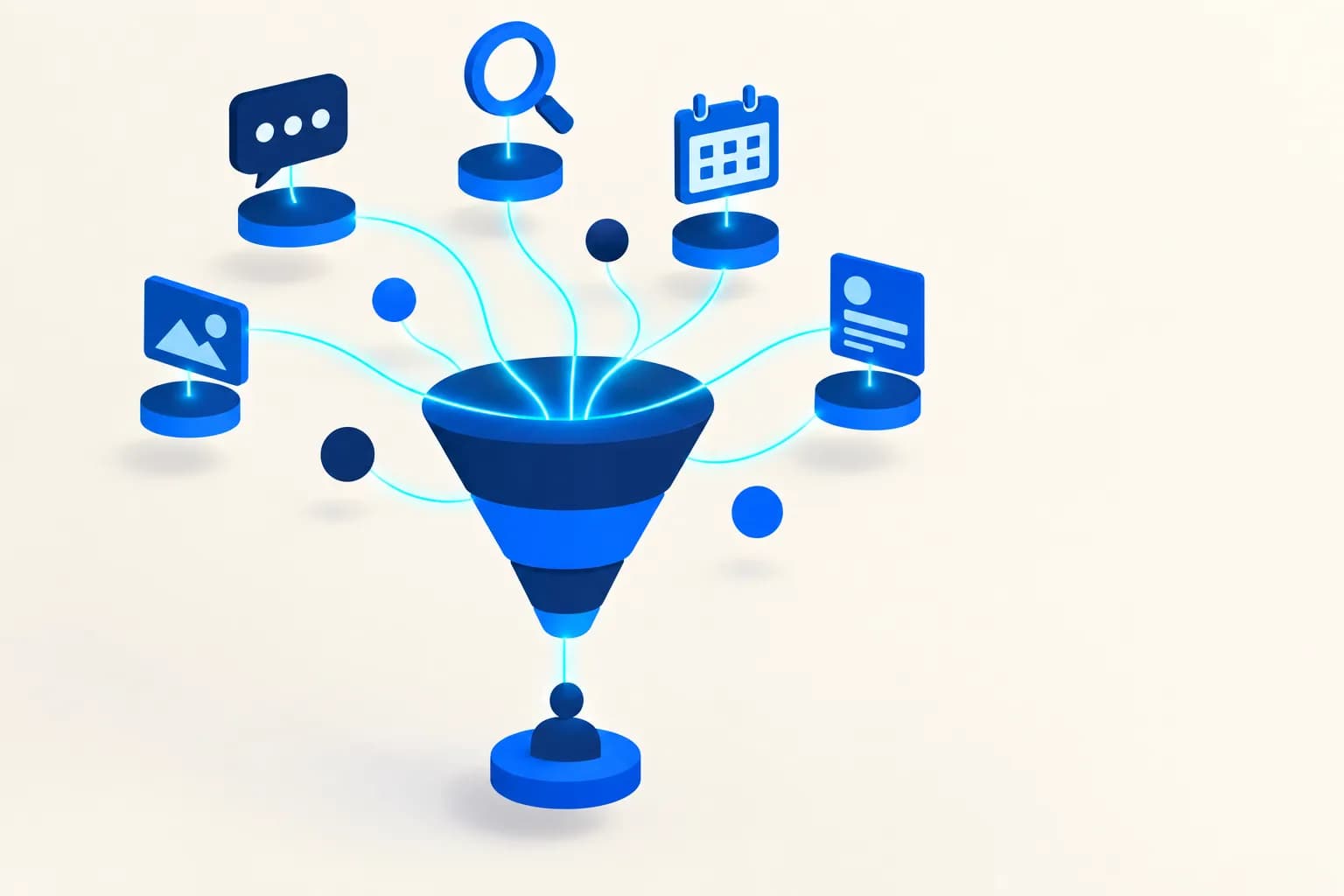
Other practical applications include:
- Lead research: Scanning for potential customers matching your target audience and performing initial qualification.
- Market and competitor analysis: Regularly tracking competitors' campaigns, pricing, and content strategies.
- Customer communication: Responding to questions via WhatsApp or Telegram, guiding customers through booking or order processes.
- SEO support: Identifying keyword opportunities and reporting content gaps.
- Campaign optimization: Monitoring ad performance data and suggesting budget adjustments.
For example, instead of manually preparing a weekly competitor analysis report, an agency can delegate this task to an agent; the agent collects relevant data, summarizes it, and pushes it to a team dashboard. Marketing automation is an important tool for strengthening customer communication using accurate data and leveraging personalized experiences (Luckyeye).
AI Agent Applications in Customer Service
Customer service is one of the most mature use cases for AI agents. An agent can examine a user's location data, real-time signals from the line, and historical incident records to identify the issue and create a remote solution (Turkcell). This approach, especially in telecommunications and sectors requiring technical support, helps teams focus by routing human intervention only to complex cases.
For SMBs, a lighter example is Tidio Lyro; this agent uses content provided by operators—such as FAQ entries, help articles, and scraped website pages—to answer customer questions (AIMultiple). On the enterprise side, Salesforce Agentforce includes sales and customer service agents that work directly with CRM records (AIMultiple).
Important note: Before deploying an agent for direct customer interaction, you must clearly define which topics it can make autonomous decisions on and which situations require human escalation.
Which Platforms Can Be Used to Build AI Agents?
There are many agent platforms on the market for different needs; the right choice depends on your team's technical capacity and use case.
| Platform | Focus Area |
|---|---|
| Google Vertex AI Agent Builder | General-purpose agent creation, model selection and orchestration in console |
| Salesforce Agentforce | CRM-integrated sales and service agents |
| Creatio AI Studio | Agent layer of CRM and workflow platform |
| IBM watsonx Orchestrate | Governance and security-focused orchestration for regulated industries |
| GitHub Copilot CLI | Specialist agents for software development processes |
On Google's Vertex AI Agent Builder platform, agent success is measured by how satisfied users are with the suggestions they receive (discovery, planning, booking, and so on) (Google Codelabs). At enterprise scale, the Gemini Enterprise Agent Platform brings model selection, agent development, orchestration, and governance together in a single console (AIMultiple), while IBM watsonx Orchestrate particularly serves regulated sectors with a governance dashboard, security control center, and observability trails under an agentic Control Plane (AIMultiple).
On the code development side, OpenAI Codex stands out as a terminal-based agent that can read a repository, modify files, run tests, and iterate on errors (AIMultiple); GitHub Copilot CLI delegates tasks to four specialist agents running in parallel—Explore, Task, Plan, and Code-review—and automatically compresses conversation history at the 95 percent token limit level (AIMultiple). For marketing teams, no-code platforms that don't require coding knowledge make it easier to get started; tools like OrqLabs aim to provide solutions for no-code needs in this space.
What Should You Consider When Choosing an AI Agent?
Reviewing a few practical criteria before selecting an agent platform can reduce disappointments down the road.
- Integration scope: Can the agent connect to your CRM, social media accounts, and messaging channels?
- Data security: Under what conditions is customer data processed and stored?
- Control and transparency: Can you audit the decisions and actions the agent takes after the fact?
- Scalability: Can the platform handle the load as your team grows or channel count increases?
- Code-free setup: If you don't have a technical team, no-code interfaces save time.
Creating a table with these criteria and comparing your candidates will make your decision process more concrete and facilitate team discussions.
Key Takeaways
- An AI agent is an autonomous system that operates through cycles of sensing, decision-making, action, and learning.
- The difference from chatbots is not just answering questions, but completing tasks end-to-end.
- In marketing, AI agents can be used in many areas such as content creation, lead research, competitor analysis, and customer communication.
- When selecting a platform, be sure to evaluate integration, data security, and transparency criteria.
- In addition to enterprise solutions, no-code agent platforms have become accessible to SMBs.
Conclusion
AI agents have become a practical technology that allows marketing teams to delegate repetitive tasks and focus more time on strategic work. Choosing the right platform and clearly defining the agent's authority limits are the keys to using this technology responsibly. If you'd like to start looking for a code-free solution for tasks like social media content, chatbot management, or lead research, you can get acquainted with OrqLabs.
Frequently asked questions
What are the fundamental differences between an AI agent and a chatbot?
A chatbot typically provides fixed responses within predefined rules and scenarios. An AI agent, on the other hand, can understand customer requests, gather necessary data, create a solution plan, and interact with different systems to complete a task end-to-end.
How can AI agents be used in marketing and what kinds of tasks can they automate?
AI agents can be used in social media content creation, lead research, market and competitor analysis, customer communication, and SEO opportunity identification. This allows repetitive research and reporting tasks to be largely automated.
How does an AI agent make decisions and what technologies are used in this process?
An agent operates through a four-stage cycle: sensing, decision-making, action, and learning. The process uses Large Language Models, memory structures, and tools for external system integration; many modern agents are based on the ReAct paradigm, which combines reasoning with action.
How does marketing automation help businesses?
Marketing automation strengthens customer communication using accurate data and makes it easier to deliver personalized experiences. This allows teams to run more consistent and measurable campaigns rather than relying on manual follow-up.
Which platforms and tools can be used to develop AI agents?
Along with enterprise platforms like Google Vertex AI Agent Builder, Salesforce Agentforce, Creatio AI Studio, and IBM watsonx Orchestrate, code-free agent platforms also offer accessible options for marketing teams.
What are the applications of AI agents in customer service?
AI agents can identify issues by combining customer location data, real-time signals, and historical records, and can suggest remote solutions. At the SMB level, lighter chat agents that leverage FAQs and help content are also commonly used.
Sources
Sources used while preparing this article.
- Yapay Zeka Ajanı (AI Agent) Nedir, Nasıl Çalışır? - Turkcell Blogturkcell.com.tr
- What Is an AI Agent? Types and Exampleswww-salesforce-com.translate.goog
- Vertex AI Agent Builder ile yapay zeka ajanları oluşturma | Google Codelabscodelabs.developers.google.com
- Pazarlama Otomasyonuluckyeye.com
- AI Ajan Araçları: 15+ Platformun Karşılaştırmasıaimultiple.com