Lead Discovery Tools: A Guide for SMBs and Agencies
Lead discovery tools aren't just software—they're a system spanning data sources to CRM. A practical guide for SMBs and agencies.

Contents
- What Are Lead Discovery Tools and What Layers Do They Consist Of?
- Finding Leads Through Inbound and Outbound Channels
- Data Sources and Enrichment: Capturing the Right Information
- B2B Lead Scoring: Which Signals Should You Use?
- Increasing Conversion with Personalization and Sequencing
- Integrating Lead Discovery Tools with Your CRM
- Quality Control: Separating Qualified and Unqualified Prospects
- Key Takeaways
- Conclusion
- Next step: automate lead discovery
- Frequently asked questions
- Sources
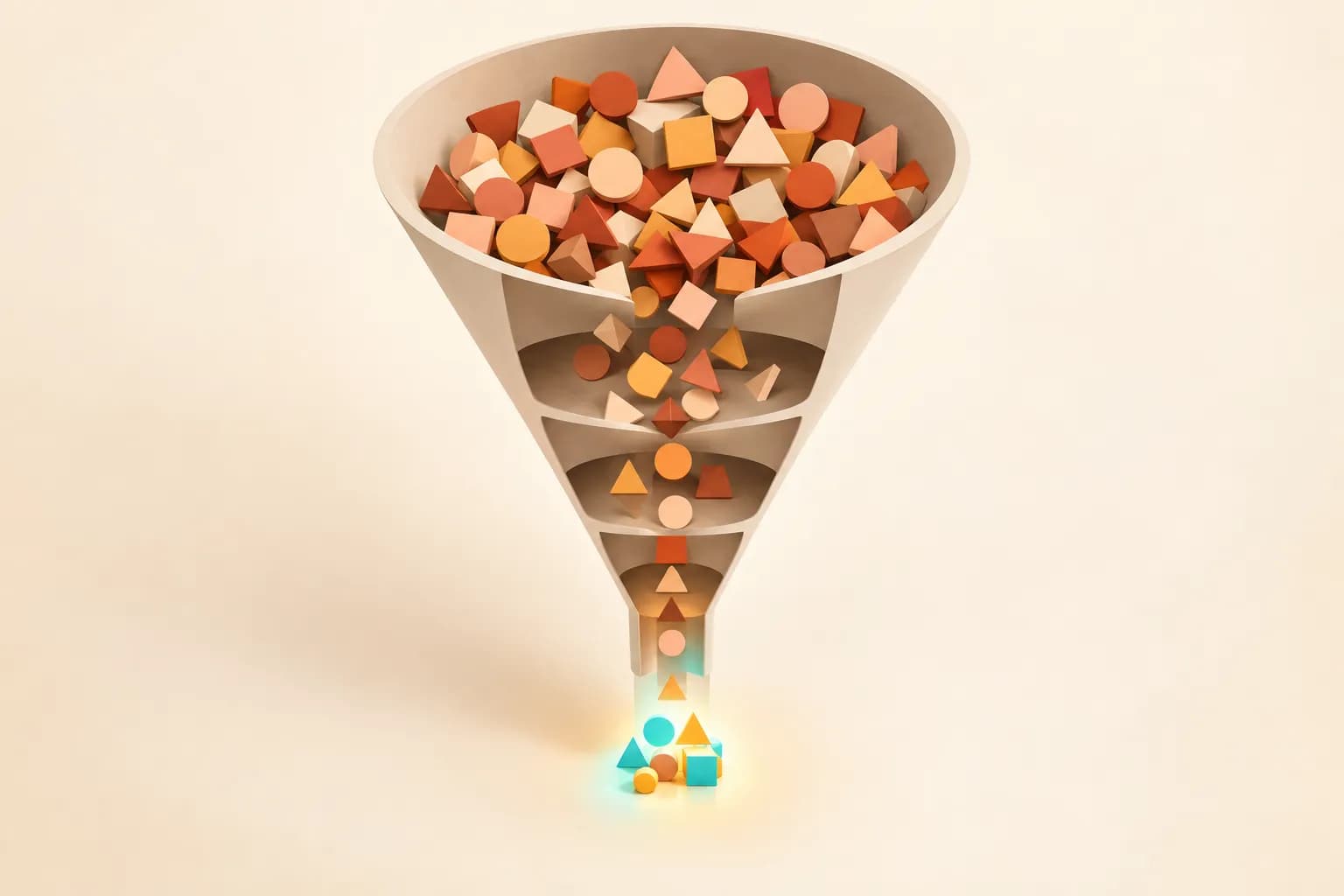
Lead discovery tools refer to the collective set of software and methods that enable a company to identify people and businesses that could become future customers; however, they are not a single tool but rather a system comprising data sources, enrichment, scoring, personalization, sequencing, CRM, and quality control layers (GrowthEffect). SMBs and agencies often get stuck on the question "which tool should we use," but the real problem is usually not a lack of tools but rather that these tools work in isolation from each other (GrowthEffect). In this guide, we address each layer individually and provide practical steps to build an end-to-end process that works for you.
What Are Lead Discovery Tools and What Layers Do They Consist Of?
A lead is a prospect—someone who isn't yet your customer but could become one in the future. This includes anyone who calls asking about pricing, visits your booth at a trade show, or fills out a form on your website (TeamGram). Lead discovery tools help you systematically capture, enrich, and prepare these prospects for sales.
For a typical SMB, the layer structure works like this:
- Data source – where raw company and contact data is collected (LinkedIn, website forms, databases).
- Enrichment – the layer where missing fields are completed (email, job title, company size).
- Scoring – the layer where prospects are prioritized.
- Personalization – the stage where messaging is tailored to the individual.
- Sequencing – the process where follow-up messages are automated.
- CRM and quality control – the final checkpoint where data is recorded and monitored.
Rather than expecting a single tool to handle all these layers, evaluating each one separately and establishing data flow between them yields far more robust results over time.
Finding Leads Through Inbound and Outbound Channels
Lead discovery channels fall into two main categories: inbound and outbound (TeamGram). In inbound, prospects come to you—people who find you through content marketing, SEO, social media, and ads fall into this group. In outbound, you go to the prospect—cold email, LinkedIn messages, and phone calls are classic examples of this category.

In practice, rather than completely separating the two channels, it's recommended to track them together in the same CRM using different tags. For example, an agency can mark forms from their website as "inbound" and prospects found on LinkedIn as "outbound," then track the conversion rate for each channel separately. This distinction makes it easier to decide how much budget and time to allocate to each channel.
Tip: When planning outbound campaigns, you can take advantage of workflow tools that make automated message sending and follow-up easier; our n8n alternative no-code AI workflow guide can provide ideas on this.
Data Sources and Enrichment: Capturing the Right Information
A good data source should be able to answer four essential questions: Is this company truly in your ideal customer profile, is this person in a role that can own the problem, is the company size and industry suitable, and are there any overlaps with existing customers or opt-outs (GrowthEffect). Any source that can't provide clear answers to these questions will waste your time, no matter how large it is.
The enrichment layer completes missing or outdated data; fields like email, phone, job title, tenure, company domain, LinkedIn URL, technologies used, employee count, and location are clarified here (GrowthEffect). Some data providers offer quite comprehensive coverage on this front; for example, Skrapp.io claims a database of over 200 million B2B leads and 97% email verification accuracy (Skrapp).
Practical advice: Rather than relying on a single enrichment source, use at least two sources and cross-check them. Don't skip the email verification step in particular; incorrect email addresses harm both your delivery rate and your domain reputation.
B2B Lead Scoring: Which Signals Should You Use?
Not all leads have equal value. When qualifying B2B leads, you should evaluate fit (alignment with target industry and company size), role (decision-making position), need (whether the solution actually solves their problem), and authority (ability to influence the purchase decision) (Skrapp). This is similar to the classic BANT (Budget, Authority, Need, Timing) approach but offers a more operational framework.
A more current and practical scoring model evaluates five signals together: hard fit, problem fit, timing, data quality, and engagement signals (GrowthEffect). For example, a prospect might be suitable in terms of company size (hard fit) but hasn't clicked any of your emails in the last three months (low engagement)—in this case, it makes more sense to put them in a nurture sequence rather than hand them off to sales immediately.
The purpose of prospect evaluation is exactly this: to verify whether a lead meets basic criteria. Those who meet the criteria are considered qualified; those who don't are considered unqualified (TeamGram). Teams that automate scoring by pre-defining criteria save significant time rather than scoring manually.
Increasing Conversion with Personalization and Sequencing
Finding the right lead isn't enough; the message must reach them personalized and at the right time. The personalization layer uses data from enrichment (job title, industry, technologies used) to customize the message. For example, an ecommerce software agency that knows which shipping integrations their target company uses can address that specific point in their first message.
Sequencing ensures these messages are automatically sent over time: first email, follow-up three days later, LinkedIn message a week later, and so on. The important thing to watch out for here is not to fully automate sequencing and lose the human touch; leads that respond at each step should be removed from the sequence and handed over to your sales team.
You can manage leads from social media similarly; if you want to standardize your content planning and approval processes, take a look at our automated social media posting and planning guide.
Integrating Lead Discovery Tools with Your CRM
Having collected and scored leads flow regularly into a CRM is the most critical part of the process. Without integration, collected data gets lost in Excel files. Some data providers offer direct support at this point; for example, Skrapp enables integration with CRM systems like HubSpot, Salesforce, and Pipedrive (Skrapp).
The steps typically followed when setting up an integration are:
- Determine which fields (email, job title, company, score) will be transferred to the CRM.
- Define a unique field (usually email or domain) for duplicate detection.
- Create automatic assignment rules based on scoring thresholds (for example, high-scoring leads go directly to a sales rep).
- Test the integration with a small dataset and fix any mapping errors.
- Regularly audit data quality.
The fundamental purpose of prospect discovery software is to simplify, optimize, and automate steps in the sales process; a well-built system can automatically qualify and prioritize prospects (Bitrix24). If you're curious about the role of AI-powered agents in this context, check out our what is an AI agent guide.
Quality Control: Separating Qualified and Unqualified Prospects
Quality control should work from start to finish, not just at the end of the process. Research shows that 18% of sales reps struggle to find quality prospects, and only 26% of salespeople are able to generate between 1 and 10 new prospects per week (Bitrix24). These numbers demonstrate why investing in data quality is so critical. Additionally, a 2022 study found that 29% of sales reps viewed improving sales process efficiency as their top priority.
The following table summarizes the control points that should be checked by layer:
| Layer | Control Point | Common Mistake |
|---|---|---|
| Data source | ICP alignment, duplicate checks | Focusing on volume and missing fit |
| Enrichment | Email verification, current job titles | Working with outdated or changed information |
| Scoring | Evaluating fit + engagement together | Making decisions based on a single signal |
| CRM integration | Duplicate control, automatic assignment | Continuing with manual data entry |
Source: Bitrix24, GrowthEffect
Key Takeaways
- Lead discovery tools aren't a single product; they're a complete system comprising data sources, enrichment, scoring, personalization, sequencing, CRM, and quality control layers.
- Tracking inbound and outbound channels with separate tags makes budget and time planning easier.
- In scoring, evaluate fit, role, need, authority, and engagement signals together rather than relying on a single criterion.
- Without CRM integration, collected data becomes worthless; duplicate detection and automatic assignment rules are essential.
- Investing in data quality is one of the most effective ways to reduce wasted time for your sales team.
Conclusion
When properly configured, lead discovery tools make the sales process more predictable for SMBs and agencies; however, success comes not from a single software but from the layers working together. If you think through your data source, enrichment process, scoring model, and CRM integration holistically, you'll work with more qualified prospects over time. If you want to automate these processes without code, consider exploring OrqLabs.
Next step: automate lead discovery
Frequently asked questions
What layers do lead discovery tools consist of?
Lead discovery tools consist of interconnected layers: data source, enrichment, scoring, personalization, sequencing, CRM, and quality control. Each layer performs a different function—the data source collects raw information, enrichment completes missing fields, scoring prioritizes prospects, personalization and sequencing tailor and time messages, and the CRM records the entire process.
Which signals should be used in B2B lead scoring?
A practical scoring model evaluates hard fit, problem fit, timing, data quality, and engagement signals together. Fit, role, need, and authority criteria are also used to determine whether a prospect is qualified. Evaluating multiple indicators together rather than relying on a single signal produces healthier results.
Which data fields should be updated in the enrichment process?
During enrichment, fields like email, phone, job title, tenure, company domain, LinkedIn URL, technologies used, employee count, and location should be updated. The accuracy of these fields directly affects the quality of messaging and scoring stages. Rather than trusting a single source, cross-checking multiple sources is recommended.
How should I separate inbound and outbound prospects?
In the inbound channel, prospects come to you (through content, SEO, social media). In the outbound channel, you reach out to prospects (through cold email, LinkedIn messages, phone calls). You can track both channels in the same CRM using different tags and measure the conversion rate for each channel separately. This distinction helps you decide which channel deserves more resources.
What should I watch out for when integrating lead discovery tools with my CRM?
First, determine which fields will be transferred to the CRM and define a unique field for duplicate detection. Creating automatic assignment rules based on scoring thresholds and testing the integration with a small dataset prevents errors. Finally, regularly auditing data quality ensures the process runs smoothly.
Sources
Sources used while preparing this article.